

 8613480627251
Many companies that regularly procure titanium materials eventually face the same practical question: what is the actual value of the mountains of titanium chips generated during machining, or of discarded and scrapped titanium parts? Initially, many treat this scrap simply as "industrial waste" to be disposed of casually, unaware that titanium is one of the metals with the most mature recycling ecosystem in China. There is a real art to how scrap titanium is priced; this article explores this "reverse cost-reduction" business in depth.
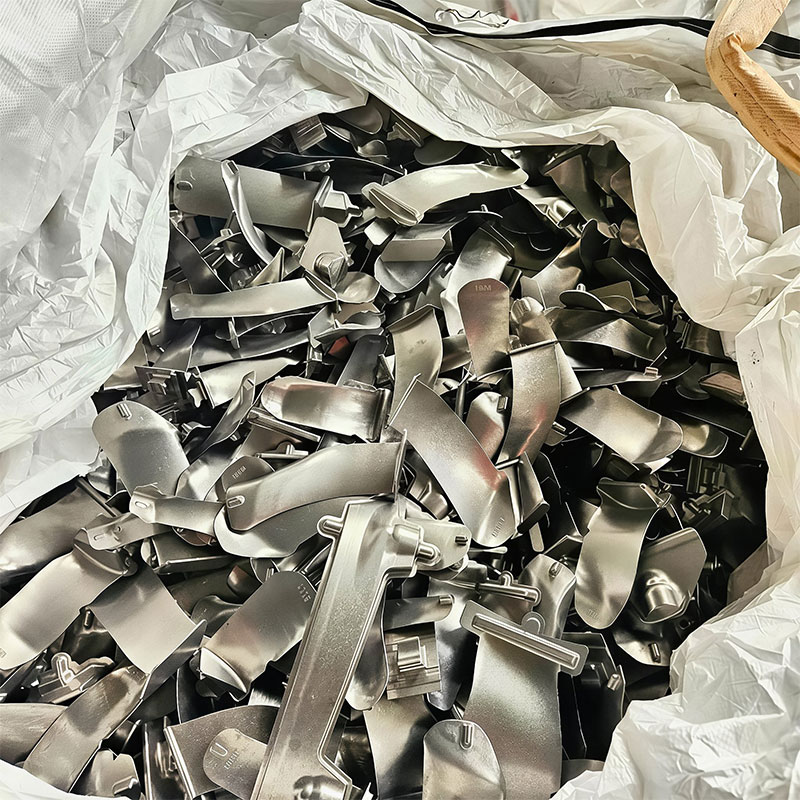
Three Key Reasons Why Scrap Titanium Is Always in Demand
The recycling market for scrap titanium consistently enjoys stable demand, driven by three core factors:
High Barriers to Primary Titanium Smelting: Producing virgin titanium sponge is a complex, energy-intensive, and time-consuming process. In contrast, scrap titanium with verified chemical composition can be fed directly back into the furnace, making it a highly cost-effective, high-quality raw material for downstream smelters.
High Recovery Rates Across the Process: Titanium scrap boasts a much higher utilization rate in vacuum-melting systems than most other common metals. The industry has established a mature, end-to-end supply chain: professional on-site collection, expert sorting and classification, and centralized remelting.
Pricing Anchored to Titanium Sponge Markets: The price of scrap titanium is closely linked to the market price of virgin titanium sponge; when the price of titanium sponge rises, the recovery price for scrap titanium follows suit.
Three Tiers of Scrap Titanium Pricing
There is no single, uniform price for scrap titanium. Instead, it is categorized into three distinct tiers based on its physical form and purity:
Tier 1 (Bulk Scrap): This includes discarded titanium plates, bars, and offcuts from forged parts. With a clear chemical composition and no contamination, this category commands the highest recovery price—typically calculated as a percentage of the price for new titanium material.
Tier 2 (Titanium Chips/Shavings): These are the chips and shavings generated during machining (turning, milling, etc.). Their value depends entirely on their "cleanliness"—specifically, whether they are contaminated with oil, coolants, or other metal debris. Clean, dry chips consisting of a single, identifiable alloy grade are valued much higher than those mixed with impurities. Significant Differences in Recycling Value
Materials with coatings or composite structures—such as scrap titanium anodes with coatings or offcuts from titanium-steel clad plates—require additional stripping or separation processes. Consequently, their valuation is discounted to account for these processing costs.
Key Practices for Maximizing the Value of Scrap Titanium
To ensure you receive the best possible price for your scrap titanium, pay attention to the following details to avoid unnecessary price reductions:
Segregate by Grade: If titanium turnings of different grades (e.g., TA2 and TC4) are mixed, the recycler will value the entire batch based on the lower-value grade. Storing different grades in separate containers is the simplest and most effective way to preserve value.
Minimize Oil Contamination: Titanium turnings heavily contaminated with oil require additional degreasing, which leads to significantly lower offers. Using a centrifuge in your machine shop to remove oil from turnings beforehand can substantially increase the final recycling price.
Prioritize Fire Safety: Fine titanium turnings are highly flammable and can even undergo spontaneous combustion in high-temperature environments. They must be kept dry, away from open flames, and should not be piled up in large quantities—a requirement also mandated by regulatory standards for the storage of titanium scrap.
Choose Legitimate Trading Channels: As a metal waste product subject to specific regulatory requirements, scrap titanium should be sold to licensed recyclers. Always retain complete transaction documentation to avoid potential compliance risks.
How the Economics of Recycling Work
For a typical machining enterprise, raw material costs account for over 70% of the total procurement expenditure for titanium. Properly segregating and recycling the titanium turnings generated during production can significantly offset these material costs. In the industry, it is often said that "managing titanium turnings well is equivalent to getting a direct discount on your titanium material purchases."
Many titanium manufacturers have established collaborative models with their downstream clients, where scrap is bought back or used as a credit against the cost of new materials. Selling back the scrap titanium generated during processing while purchasing new titanium stock has become a standard, highly efficient practice for reducing overall material costs.
